
The open-source AI landscape in 2026 has definitively shifted from passive chat interfaces to autonomous execution and workflow orchestration. Developers are no longer just building wrappers around large language models (LLMs); they are deploying Agentic AI—systems capable of multi-step reasoning, tool calling, and self-healing. However, the ecosystem is heavily fragmented between frameworks that look impressive in demonstrations and those that actually survive the rigors of production. This guide synthesizes current developer sentiment, benchmark data, and architectural shifts to highlight the most effective open-source AI agents and frameworks available.
The 2026 Paradigm Shift: From Chatbots to Agentic Infrastructure
The industry has moved past the rigid constraints of traditional Robotic Process Automation (RPA) into the era of Large Action Models (LAMs). Instead of relying on brittle, hard-coded scripts, modern open-source AI agents dynamically interpret natural language to navigate interfaces, write code, and manage state.
Visual demonstrations of modern agent runtimes reveal that these tools are becoming foundational layers. For example, observed tests of OpenAI's "Symphony" project show agents operating on a Kanban board, autonomously spawning to handle specific backlog tickets without human intervention. As one expert demonstration noted, open-source AI agents are not just replacing applications; they are replacing the infrastructure layers behind those applications, turning agent runtimes into programmable environments dominated by Python and TypeScript.
Top Open-Source AI Agents by Category
Because the "one-size-fits-all" agent framework is a myth, the 2026 ecosystem has categorized itself into specialized domains.
Local Execution & OS Gateways
Local-first agents have seen massive adoption due to privacy concerns and the need for deep operating system integration. OpenClaw has emerged as a breakout star in this category. Built on Node.js, it acts as a local-first gateway that connects AI models to over 50 integrations (including Slack, WhatsApp, and OS commands) while keeping data on-device. It possesses the unique capability to autonomously write and execute its own new skills.
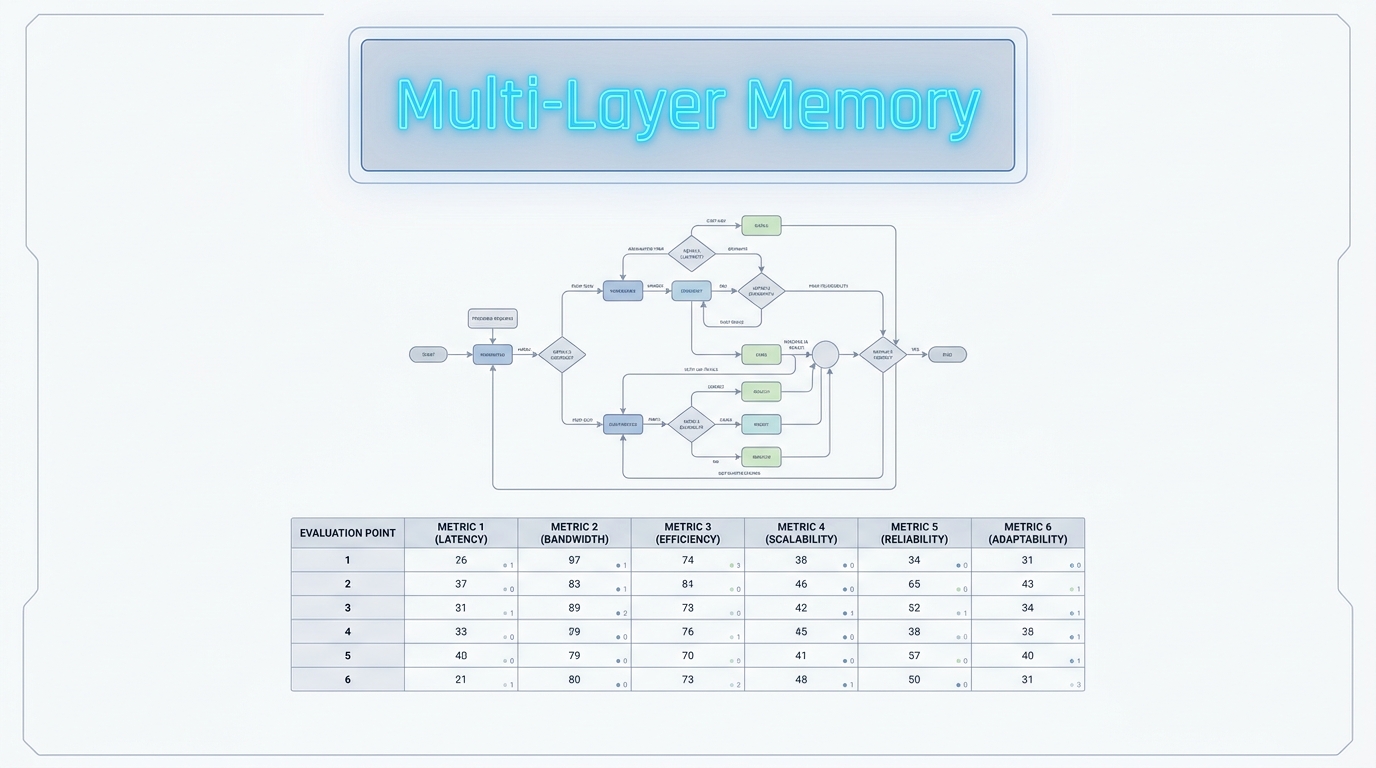
When evaluating local execution, developers often weigh the lightweight, OS-level control of OpenClaw against cloud-native alternatives that prioritize long-term memory. For a deeper architectural breakdown of these approaches, see this comparison of Openclaw vs Hermes AI agents. Hermes Agent, for instance, utilizes a persistent multi-layer memory system (semantic, working, and episodic) to create a closed learning loop that persists knowledge across sessions.
Web Automation Agents
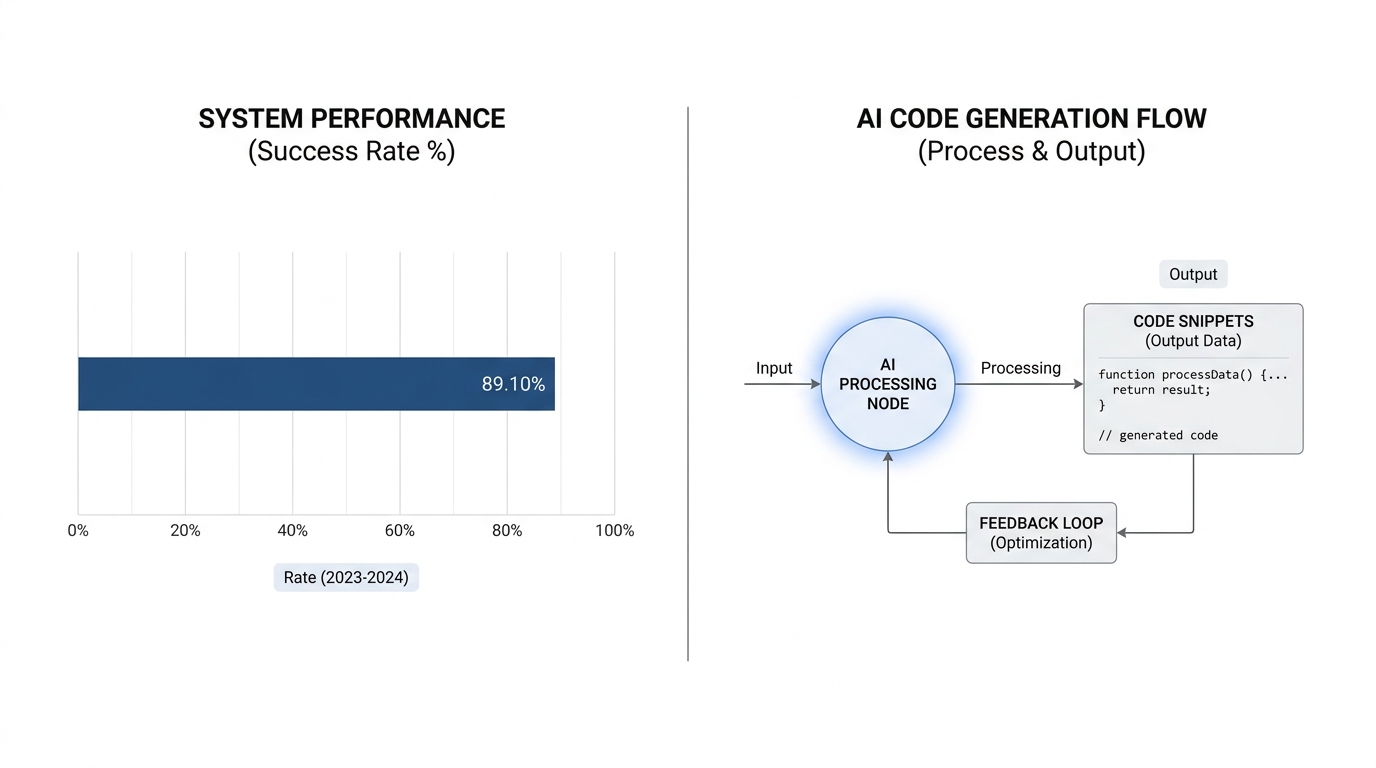
Browser automation has evolved from writing brittle Selenium scripts to issuing natural language commands. Browser Use is currently a leading open-source framework, achieving an 89.10% success rate on the WebVoyager benchmark. Visual examples of similar tools, like Page-Agent, demonstrate the AI physically controlling the web interface—highlighting DOM elements, navigating navigation bars, and extracting markdown summaries autonomously.
Coding & Software Engineering
Purpose-built software engineering agents are drastically reducing boilerplate work. OpenDevin (OpenHands) provides a safe, sandboxed execution environment for complex coding tasks. Meanwhile, tools in the Claude ecosystem are fundamentally changing developer workflows. Real-world developer feedback indicates that utilizing these tools can increase coding velocity by roughly 40% on repetitive tasks. To understand how these specific coding models stack up against legacy systems, read this analysis of Claude Code vs OpenAI Codex.
Workflow Orchestration & Tool Calling
For "glue workflows"—where the primary task is moving data between systems—platforms like n8n and Dify lead the pack. n8n combines visual no-code interfaces with LangChain integration, while Dify provides a production-ready platform for Retrieval-Augmented Generation (RAG). A critical component of these modern orchestrators is their reliance on standardized tool calling. To learn how these frameworks seamlessly connect to external APIs, review this practical guide to Model Context Protocol (MCP) for AI agents.
Multi-Agent Orchestration & State Management
Frameworks like CrewAI and Microsoft's AutoGen excel at role-based multi-agent collaboration. Visual tests of multi-agent architectures (such as the HiClaw matrix chat room) show a "Manager" agent receiving human instructions and instantly delegating sub-tasks to "Worker" agents in real-time. For complex, branching workflows, LangGraph is highly praised for handling persistent state machines, though it is often considered overkill for simple linear pipelines.
The "Demo vs. Production" Reality Check
📺 10 Open-Source AI Agents Replacing Paid Tools in 2026
There is a stark contradiction between marketing hype and real-world developer sentiment. While frameworks like CrewAI and AutoGen dominate GitHub trending pages, engineering communities frequently warn that they can be "painful in prod" due to state management failures and cascading hallucination errors.
Recent benchmark data grounds this hype in reality:
- The 38.6% Success Rate: According to the Toolathlon benchmark, top models only achieve a 38.6% success rate when executing complex tasks in real software environments.
- The 10-Step Limit: A UC Berkeley survey indicates that 68% of production-grade agents are strictly limited to under 10 steps. Beyond 10 steps, the probability of cascading errors increases exponentially.
- Hardware Constraints: Running local execution agents (like AgenticSeek or Open Interpreter) requires significant hardware. A minimum of an RTX 3060 (12GB VRAM) is generally required for stable local inference, while mobile-first agents demand flagship chips like the Snapdragon 8 Gen2+.
Because complex tasks average 90 tool calls and require massive context windows, enterprise deployments (which surpassed 50% adoption in early 2026) heavily rely on "human-in-the-loop" safeguards for high-risk financial or medical workflows.
Security and Sandboxing: The Un-Sandboxed Danger
Giving an AI agent "god-mode" unrestricted access to an operating system or terminal is a massive security risk. As agents transition from passive assistants to active executors, secure sandboxing is non-negotiable.
Observed tests of infrastructure tools like OpenSandbox demonstrate how developers use Python snippets (await sandbox.create) to programmatically spin up secure, isolated Docker or Kubernetes environments. Without these ephemeral, isolated runtimes, an autonomous agent hallucinating a destructive terminal command (e.g., deleting a critical directory) could cause catastrophic system failure.
Framework Evaluation Matrix
When choosing an open-source AI agent framework, avoid relying on vanity metrics. Use this 6-point evaluation matrix based on current production standards:
| Evaluation Criteria | Description | Best-in-Class Examples |
|---|---|---|
| 1. State & Memory Architecture | Does the agent have persistent multi-layer memory (semantic, episodic) or does it reset every session? | Hermes Agent, Agno (Phidata) |
| 2. Execution Environment | Can the agent run code safely in an isolated sandbox, or does it require raw OS access? | OpenDevin, OpenSandbox |
| 3. Workflow Complexity | Is the framework built for simple linear chains or complex, branching state machines? | LangGraph (Complex), OpenAI Agents SDK (Linear/Lightweight) |
| 4. Tool Integration Standard | Does the framework natively support the Model Context Protocol (MCP) for standardized API connections? | Dify, n8n |
| 5. Deployment Threshold | Is it a zero-code visual builder or a code-heavy developer framework? | n8n (Zero-code), LangChain (Code-heavy) |
| 6. Multi-Agent Collaboration | Can the framework assign distinct personas (Manager, Coder, Reviewer) to delegate tasks? | CrewAI, AutoGen |
What to Ignore in the AI Agent Space
To navigate the 2026 AI landscape effectively, filter out the following noise:
- Daily GitHub Star Counts: Ignore daily or weekly star metrics. They are highly volatile vanity metrics that do not reflect architectural stability or production readiness.
- "Fully Autonomous" Claims: Ignore marketing that promises 100% autonomous AI teams without human oversight. The data proves that complex tasks still require human-in-the-loop validation.
- Unofficial API Wrappers: Be wary of relying on unofficial libraries (e.g., unofficial Python wrappers for Google's NotebookLM). While useful for prototyping, they can break without notice if the parent company alters their internal APIs, destroying your automated workflow.
Frequently Asked Questions (FAQs)
What is the difference between zero-code and code-heavy agent frameworks?
Zero-code platforms (like Dify or Coze) offer visual, drag-and-drop interfaces for connecting LLMs to tools, making them ideal for operators and analysts. Code-heavy frameworks (like LangChain or LangGraph) require Python or TypeScript knowledge but offer granular control over state management, memory, and custom tool execution.
Why do complex multi-step agents fail in production?
Agents often fail in production due to cascading errors. If an agent makes a slight reasoning mistake on step 3 of a 15-step task, every subsequent step is built on flawed logic. This is why 68% of production agents are artificially limited to 10 steps or fewer.
What hardware do I need to run local AI agents?
To run open-source models locally with acceptable speed and context windows, you generally need a GPU with at least 12GB of VRAM (such as an NVIDIA RTX 3060 or higher). For massive context windows or multi-agent local setups, 24GB VRAM (RTX 3090/4090) or Apple Silicon (M-series Max/Ultra with unified memory) is recommended.
What is the Model Context Protocol (MCP)?
MCP is an open standard introduced to unify how AI models connect to external tools and data sources. Instead of writing custom API integrations for every new tool, MCP allows agents to plug into a standardized ecosystem of data sources, making tool calling highly reliable.
How do multi-agent systems actually communicate?
In frameworks like CrewAI or AutoGen, agents communicate by passing structured text and state objects back and forth. One agent (the Manager) breaks down a prompt into sub-tasks and sends them as prompts to specialized agents (Workers). The Workers execute their tasks, return the output to the Manager, and the Manager synthesizes the final result.
Turn keyword lists into publishable articles
Install AI Article Agent, upload your topics, and build a repeatable workflow from keywords to structured SEO articles.